It’s one of the more common questions that comes up in older New York apartments and townhomes: can you paint over stained wood? The short answer is yes—but the longer answer, as with most things in paint, is that the preparation is everything. Skip the right steps, and you’ll be repainting within the year. Do it properly, and painted wood can look genuinely beautiful and last a long time.
Why Stained Wood Requires Special Preparation
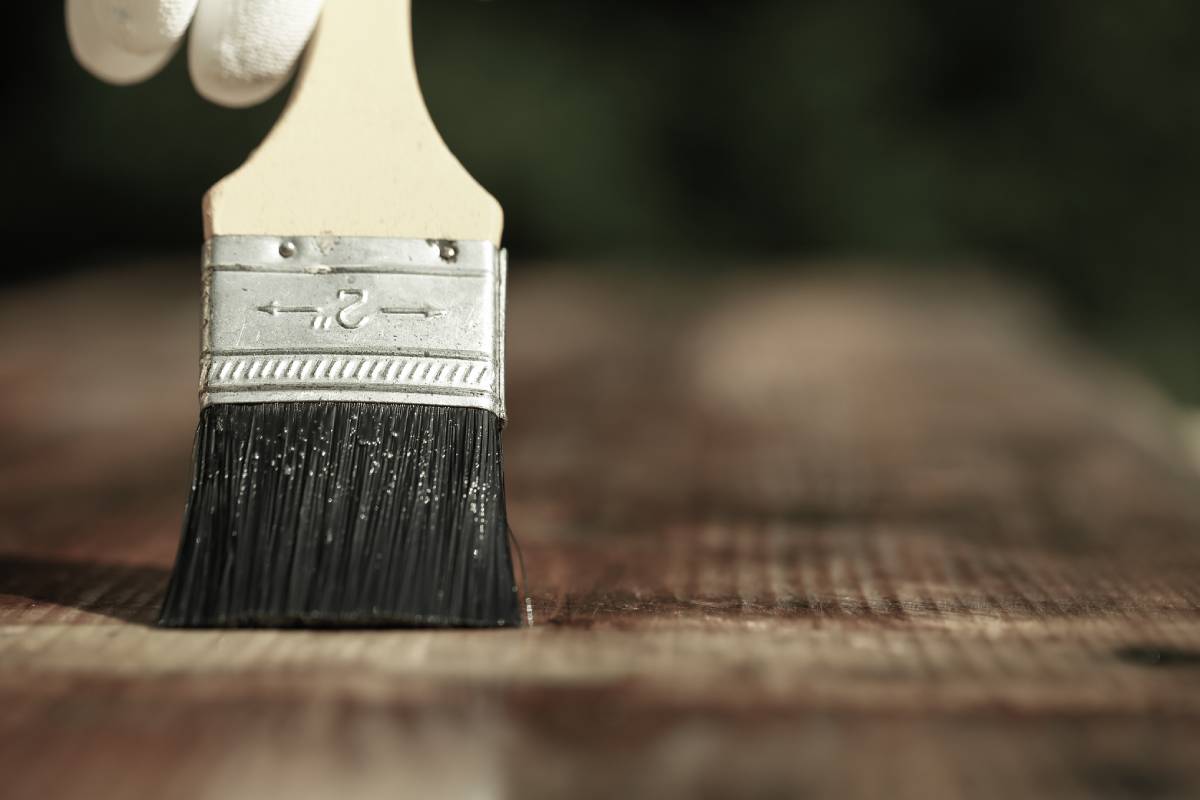
Stain penetrates wood fibers rather than sitting on the surface, as paint does. That means paint applied directly over stain often struggles to adhere properly—it can peel, bubble, or lift over time, particularly in areas with temperature and humidity fluctuations, which is essentially everywhere in New York.
Oil-based and shellac-based stains present an additional challenge: they can bleed through water-based paints, creating a yellowish or brownish discoloration that shows through the finished surface even after multiple coats. The solution isn’t more paint. It’s the right primer.
The Right Primer Makes All the Difference
Shellac-based and oil-based primers are the ones worth reaching for here. Water-based primers just don’t seal stained surfaces reliably—whatever tannins or oils are in that finish will eventually push through, showing up as a yellowish cast that more topcoats won’t fix. For surfaces with lighter staining or lower bleed-through risk, Benjamin Moore Fresh Start® High-Hiding All Purpose Primer is a solid choice. Anything heavily stained or oil-finished? Go straight to a shellac primer like Zinsser BIN—it locks things down in a way nothing else matches before topcoat.
After the primer’s fully dry, give the surface a light sand with fine-grit paper before anything else goes on. It feels like an easy step to talk yourself out of—the primer looks fine, why bother—but that little bit of texture is what the topcoat actually bonds to. Skip it, and you’re looking at peeling edges six months down the road, usually starting right where two surfaces meet.
Choosing the Right Benjamin Moore Paint for Wood
On wood, sheen matters in a way it doesn’t always on walls. Trim, cabinetry, and built-ins get touched constantly—so semi-gloss or satin isn’t just an aesthetic call, it’s a practical one. These finishes clean up without wearing down, handle the occasional splash of moisture, and actually let the quality of the wood read through rather than obscuring it. Benjamin Moore Advance® Interior Alkyd Paint is consistently one of the top choices for wood surfaces—it levels beautifully (meaning fewer visible brush marks), cures to a hard, durable finish, and is available in the full Benjamin Moore color palette.
For built-in shelving or furniture-quality finishes, Benjamin Moore Aura® Grand Entrance in a higher sheen delivers an exceptional result. It’s a more significant investment, but on high-touch surfaces, the durability and depth of finish are noticeable.
Get It Right the First Time with Janovic
Painting over stained wood is entirely achievable—with the right products and the right sequence of steps. If you’re not sure where to begin, or you want to make sure you’re choosing the right primer and topcoat combination for your specific surface, our team at Janovic is here to help.
Book a Free Shop-At-Home Appointment to get started, or stop by one of our NYC showrooms. We’re locally owned and operated, always happy to serve our neighbors throughout Manhattan, SoHo, Chelsea, Long Island City, Gramercy Park, Hell’s Kitchen, Lower East Side, Throgs Neck, The Bronx, Upper East Side, Upper West Side, Uptown West, and Yorkville.