Minimalist interior design is one of those aesthetics that tends to get misread in both directions. Some people think it means cold and empty, a room where you can’t sit comfortably. Others think it just means keeping things clean and putting the throw pillows away. The actual approach is more specific: it’s about editing down to what genuinely matters, in terms of both function and what you enjoy looking at, then being intentional with each purchase.
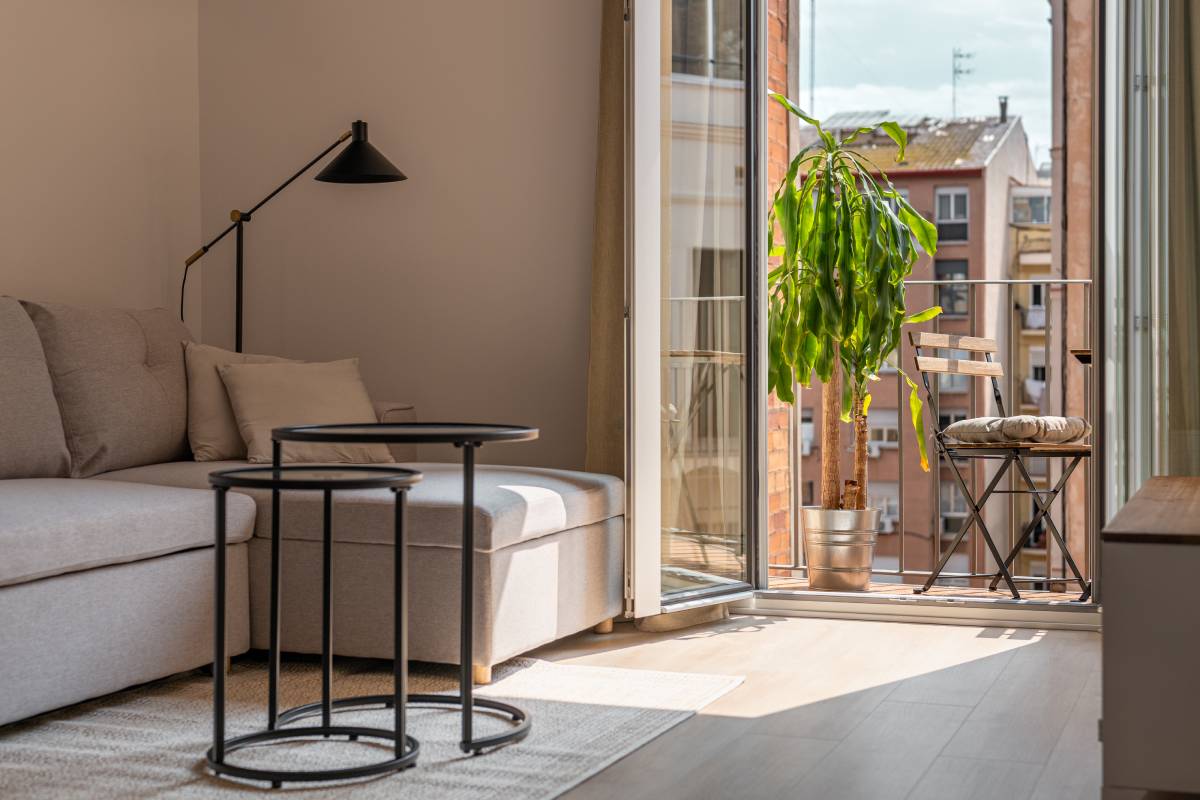
In a New York apartment, where space is tight, the mentality of ensuring every detail is intentional is one that even those who don’t consider themselves minimalists can benefit from.
What Minimalist Interior Design Looks Like in Practice
People tend to assume that minimalism, as the name implies, is about owning less. And while that is true to some extent, minimalism is more about owning things that are meaningful. Rather than filling a space with decor that can easily lead to visual clutter, a minimalist is more attuned to the meaning behind the object. They don’t need four bedding sets because the one they have was carefully curated down to the color choice and the way it hangs on the bed. Minimalism leans on investing in pieces you love that transition well through the seasons, rather than chasing fast trends.
Color in a Minimalist Space
The minimalist palette isn’t necessarily white, though white is a common choice. The goal is color that reads quietly and doesn’t call attention to itself—which can mean a warm off-white, a soft warm gray, or even a muted mid-tone that recedes rather than advances. Benjamin Moore Chantilly Lace OC-65 works well for spaces that want a clean white with no pull in any particular direction. For rooms where that reads too bright or too stark, Cloud White OC-130 adds warmth without changing the character of the space.
Color in a minimalist room tends to appear in single, deliberate moments—a chair, a single textile, a piece on the wall—against a backdrop that stays out of the way. That backdrop is where paint and window treatment decisions converge.
Getting the Window Treatments Right
Window treatments are one of the more common places a minimalist interior falls apart. Heavy hardware, a valance, or a fabric pattern that draws the eye all pull attention away from everything else you’ve worked to edit down. In a minimalist room, the window treatment should do its job — light control, privacy — without becoming a visual feature in its own right.
Hunter Douglas Designer Roller Shades fit this well. When raised, the fabric collects into a compact cassette at the top of the window and gets out of the way entirely. In rooms with abundant midday sun, Duette® Cellular Shades are a dependable choice that balances subtle volume (thanks to their cell-shaped interior) and a boost in energy efficiency. For bedrooms where blackout matters, the same crisp silhouette is available in room-darkening fabrics.
Embrace Minimalist Interior Design with Janovic
Getting the details right in a minimalist interior matters more, not less, because there are fewer details. Our design consultants can help you find window treatments that disappear into the room, as they’re meant to.
Book a Free Shop-At-Home Appointment or visit one of our New York City showrooms today. We’re locally owned and operated, always happy to serve our neighbors throughout Manhattan, SoHo, Chelsea, Long Island City, Gramercy Park, Hell’s Kitchen, Lower East Side, Throgs Neck, The Bronx, Upper East Side, Upper West Side, Uptown West, and Yorkville.